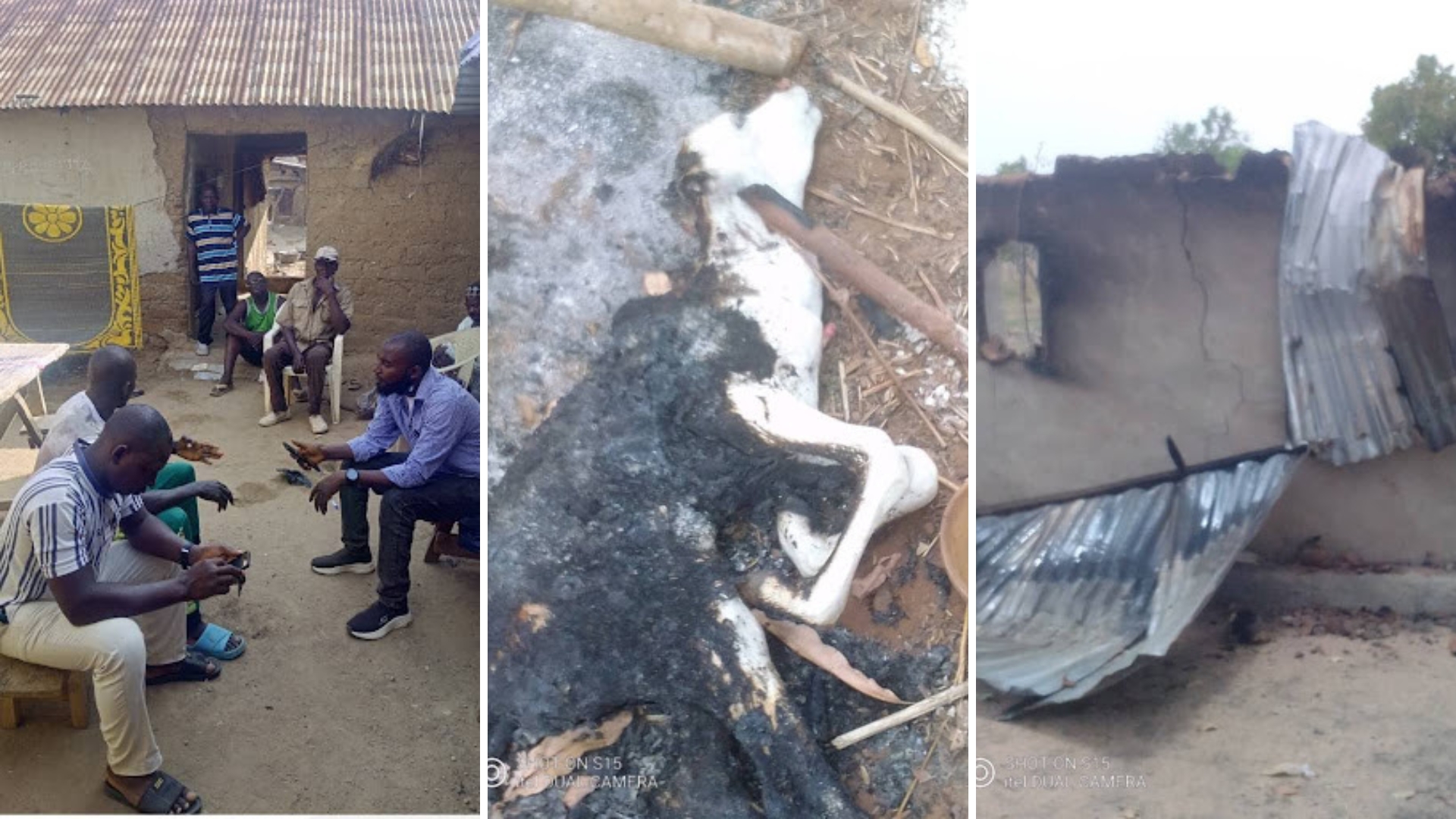
On 30 July 2025, Halidu Musa received a phone call that changed everything. His father, Musa Yatsu, was the vigilante commander in Gurfata village, Gwagwalada Local Government Area, Abuja. He had gone to the farm with others to check reports of crops being destroyed by herders. During the call, Halidu heard chaos as gunshots rang out and voices shouted warnings about an attack. This was the last time he would hear from his father as violence unfolded around him.
By evening, Musa Yatsu was dead. His killing marked a serious moment in a long history of violence. Residents believe the conflict did not start in 2025 but was building for years due to land disputes, misinformation, weak mediation, and broken peace agreements.
Interviews with community leaders, farmers, herders, security officials, and families of victims show that the crisis in Gurfata started not with killings but with land use disputes. Adamu Pada, the traditional ruler of Gurfata, said the immediate conflict began between June and July 2025 when herders tried to create a passage through farmland. Farmers rejected this, leading to a confrontation that was briefly stopped but not resolved.
The conflict did not end there. Residents say a second clash happened soon after, where a farmer was attacked with a machete and died in the hospital that same day. This death marked a turning point, increasing fear and suspicion on both sides.
While the community was mourning, another incident happened in the same area. Halidu Musa shared that vigilantes were sent out after reports of renewed farm destruction. His team, including his father, went to document the situation. Instead of gathering evidence, they walked into an ambush. Mr Pada said herders hid in the bush and suddenly attacked, resulting in the death of Musa Yatsu. Residents claim nine people were involved in the attack, but there are disputes about arrests. Mr Pada insisted the attackers were known but not arrested, while the police had a different view.
The Nigeria Police Force, through FCT Police Public Relations Officer, Josephine Adeh, said they usually handle farmer-herder disputes through mediation, not prosecution. She said both parties are invited for discussions when incidents are reported. No arrests have been made related to the recent killings. However, residents feel that the lack of prosecutions has led to a sense of impunity and ongoing violence.
The violence in Gurfata has caused many deaths and injuries over the years. Community accounts show that as far back as 2020, Labaran Musa was injured in a farmland conflict. In 2024, Shuaibu Gimba faced a similar fate. In May 2025, Hamza Yakubu was killed, followed by injuries to Abdul Abubakar, Auwal Musa Lana, and Abraham Moses, also known as Manya, in June. The situation escalated in July 2025 when Dahiru Yakubu was killed on 29 July, followed by Musa Yatsu's death on 30 July, the same day Isa’ac Abubakar was shot and Sa’ad Yakubu was injured. For the affected families, these are not mere numbers but repeated losses that have changed their lives and deepened distrust.
A relative of Dahiru Yakubu explained that the killings followed years of unresolved disputes over farmland boundaries and repeated crop destruction. Despite complaints to community leaders and police, no lasting solution was found, leaving residents frustrated and vulnerable to further violence.
On the other hand, herders see the conflict differently. Ibrahim Chiroma, Chairman of Miyetti Allah in Gwagwalada, said the growth of farmlands has cut down available grazing routes, forcing cattle closer to farms. He believes this pressure makes it harder for both sides to coexist. He noted that earlier systems for resolving disputes where farmers and herders negotiated compensation have broken down. Livestock deaths due to suspected poisoning have increased, with over one hundred cattle lost, though this figure is unverified.
Security agencies and community leaders confirmed that peace meetings have taken place in Gurfata with traditional rulers, security agencies, and local leaders. Sarah Ebeh, Officer-in-Charge of the State Security Service (SSS) in Gwagwalada, said they usually respond to early warning signs and hold meetings when tensions rise. She confirmed that a peace accord was signed but did not share its details, calling it confidential. She also mentioned that since their intervention, the SSS has not received new complaints, but residents dispute this, saying tensions remain and cattle still enter farms.
Attempts to get full responses from the Gwagwalada Area Council revealed limited information. Ibrahim Yamawo, media aide to the chairman, said the administration worked with security advisers and set up a peace committee for farmer-herder issues. But he admitted that no compensation has been given to victims or families affected by losses. Efforts to get more clarity from council leadership were unsuccessful.
Across all interviews in Gurfata, three main issues stand out. Residents say misinformation and rumours spread quickly, creating fear and escalating tensions before facts are known. Mr Pada explained that rumours of attacks circulate, causing fear even before mediation can start. Farmers feel frustration grows when reports of farm destruction are ignored or delayed. Herders also face misinformation, especially claims of cattle poisoning, which increases suspicion and retaliatory thoughts.
The second issue is the weak enforcement of peace agreements. Both sides acknowledge that peace accords have been signed but there is little monitoring to ensure compliance. The third issue is that security responses tend to come after violence has already occurred rather than preventing it.
For Halidu Musa, this crisis is no longer just a policy issue but a personal tragedy that shapes life in Gurfata. He said his father went to the farm not to fight but to document the damage, hoping for official help. Instead, he was killed while trying to protect the community, leaving behind a family still searching for answers.
The situation in Gurfata reveals deeper problems in managing rural conflicts. Mediation efforts are not matched with enforcement, early warning signals lack preventive actions, and peace agreements lack accountability. The community is caught between farmers who feel their land is under threat, herders who claim grazing routes are shrinking, and authorities who insist peace exists, even as residents live in fear and uncertainty. In this gap between agreement and action, violence in Gurfata continues.



Drop your comment
No comments yet — be the first to drop the gist 👇