
As countries observe World Refugee Day on 20 June, hostility towards foreigners is growing worldwide. In South Africa, World Refugee Day comes just 10 days before the 30 June deadline set by the anti-migrant group ‘March and March’. They demand that ‘undocumented’ foreign nationals leave the country and that businesses fire these workers.
Since April, protests against migrants have spread across the country. This has led to deaths of migrants, destruction of property, and many being forced to leave their homes. This situation is not new in South Africa. Since 2008, there have been waves of violence against African migrants, which the government often dismisses as isolated events instead of a serious social issue.
Negative feelings towards migrants, both now and in the past, come from stories that twist the truth. Words like ‘illegals’, ‘illegal aliens’, ‘illegal migrants’, ‘undocumented migrants’, and ‘illegal foreigners’ are used to create fear and justify violence against African foreigners.
A person cannot be illegal; only their actions can be. South African law sees unauthorised entry or overstaying a visa as crimes. Also, migration in South Africa is not a crisis; it is a normal part of life in a country with six borders. Calling migration a crisis suggests that extreme actions are needed, instead of sensible management and better governance.
President Cyril Ramaphosa recently spoke about worries concerning ‘migration and illegal migration’. He promised to take five steps: cracking down on immigration and labour law violations, preventing illegal entry, fighting corruption in the immigration system, strengthening immigration laws, and improving cooperation with other African nations on migration.
Mr Ramaphosa stressed that ‘illegal immigration is not the cause of all our economic challenges.’ But more clear and honest communication is needed to convince South Africans of this truth. Research from the Institute for Security Studies (ISS) shows that negative feelings towards migrants grow from the belief that they worsen unemployment and inequality, put pressure on housing, health, and education services, and commit more crimes.
The government's ongoing mishandling of anti-migrant violence risks the country’s reputation, diplomatic ties, and business interests. In 2024, South Africa's trade within Africa reached $42 billion. South African businesses face backlash across the continent. Many governments and the African Union have condemned the protests, issued travel warnings, and started repatriation efforts for their citizens.
March and March claims that illegal immigrants number between 15 million and 30 million, saying South Africans are becoming refugees in their own land. However, Statistics South Africa’s 2023 survey showed there are 3.1 million immigrants in the country, making up 5.1 percent of the population, including all documentation statuses.
The United Nations Department of Economic and Social Affairs used different methods and said the number of migrants hit 3.2 million in 2015, or 5.6 percent of the population. After that, the number of migrants was less than the global average of 3.6 percent, which is 15.9 percent in North America and 12.7 percent in Europe.
The 2025 Human Sciences Research Council’s Social Attitudes Survey showed that South Africans are becoming more hostile towards immigrants. Only 15 percent of adults said they would welcome all foreigners, while 42 percent would ‘welcome no immigrants.’ Attitudes have hardened, especially among poorer and working-class people in Mpumalanga, Gauteng, Limpopo, and KwaZulu-Natal.
Afrobarometer in 2025 found that seven out of 10 South Africans (69 percent) see immigrants as a negative economic impact, even though evidence shows that each immigrant worker creates about two jobs for locals.
Most (85 percent) of those polled by Afrobarometer wanted to reduce or stop refugee entry. Many do not see the difference between refugees and migrants, believing the country has too many refugees and asylum seekers. South Africa currently has around 75,000 refugees and 165,000 asylum seekers. These numbers peaked in 2015 and have been falling since then. In contrast, Uganda has two million refugees.


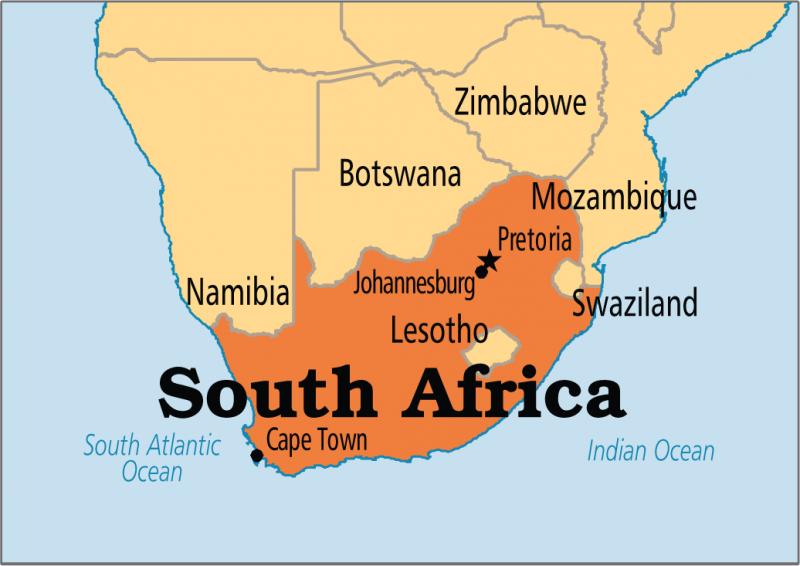
March and March claims it only targets migrants without legal rights to stay, but reports say violence affects all migrants.
For years, the ISS has shown that both the public and government overestimate the number of asylum seekers in South Africa and their impact on the Department of Home Affairs. The department has been found to make it hard for asylum seekers to access help, believing that many make false claims to stay in the country.
Many judges have been critical of the department for illegal actions, such as the long, unlawful closure of Refugee Reception Offices and corruption, along with bad management. In 2019, Amnesty International discovered that the asylum system had a very high rejection rate of 96 percent, forcing some applicants to wait up to 19 years for a decision. As of May 2026, 161,000 asylum seekers were still appealing their rejections.
Weak institutions, not migrants, are the main problem with migration in South Africa. In February, the Special Investigating Unit found that ‘the immigration system has been treated as a marketplace,’ where permits and visas were sold by corrupt officials and others.
Mr Ramaphosa rightly pointed out that systemic corruption and bad management need attention. Improving how Home Affairs applies laws and policies would be quick and cost-effective. But better management alone may not ease public anger. Protesters want massive police actions and buses to send migrants home. Yet, while these actions seem dramatic, they do not solve the real issues.
The term ‘illegal migrant’ has become common in political campaigns and will likely increase as local elections in November approach. The ISS has warned about the risks of politicians and public officials blaming foreigners for government failures. Elections create pressure for politicians to show strength and control while ignoring or benefiting from anti-migrant sentiments.
Also important are questions about who funds and organizes anti-migrant actions. The scale and planning show that these protests are not just spontaneous public anger. Organised transport, digital campaigns, branded materials, and coordinated messages need funding.
In the short term, the government must improve its management and stop corruption in its systems. It should also arrest and prosecute those who attack migrants and start a communication campaign to counter false narratives.
In the long term, South Africa should work with other African countries to manage migration challenges, put its National Action Plan to Combat Racism, Racial Discrimination, Xenophobia and Related Intolerance into action, and reform immigration and labour laws to fit current needs.
Aimée-Noël Mbiyozo is a Senior Research Consultant on migration at the Institute for Security Studies (ISS).
Drop your comment
No comments yet — be the first to drop the gist 👇