
Nigeria is fighting terrorism, banditry, kidnapping, and violent extremism. The focus has often been on arrests, military actions, and security operations. These actions are important, but real success comes from securing lawful convictions through the court system.
Recent wins in court by the State Security Service (SSS) show that Nigeria may be changing how it handles counterterrorism. The shift is from just arresting suspects to making sure that criminals and terrorists face justice under the law.
In just a few weeks, Nigerian courts have made major rulings in cases handled by the SSS. One case involved the conviction and death sentence for four terrorists linked to the brutal June 2022 attack on St Francis Catholic Church in Owo, Ondo State. This attack was one of the deadliest terrorist acts in Nigeria's recent history.
Another case involved Hauwa Mukhtar, a woman arrested for carrying 438 rounds of ammunition. She was allegedly transporting them for a well-known bandit leader in Zamfara State.
Earlier, a Federal High Court in Abuja sentenced Halima Haliru Umar to 20 years in prison. She was convicted for having 302 rounds of AK-47 ammunition and for trying to support terrorist activities. Umar was arrested by the SSS in Plateau State before facing a four-count charge.
In another significant ruling, Jibrin Halilu received the death penalty from a Kogi State High Court for kidnapping and killing a hotel owner. This judgment shows the need to turn security operations into successful prosecutions that deliver justice for victims.
These cases are more than just legal wins. They show a growing trend where intelligence gathering, investigations, prosecutions, and court decisions work together. This teamwork helps strengthen accountability, provide justice, and build public trust in government institutions.
Security experts have long maintained that defeating terrorist groups requires more than just fighting them on the battlefield. It also means breaking down their support systems, financial networks, and supply chains. The recent convictions of arms couriers mark a growing effort to disrupt the infrastructure that allows violent groups to operate in Nigeria.
Kidnapping is another major issue for Nigeria's security. It causes immediate pain for victims and their families. Kidnapping also spreads fear, harms the economy, and weakens public trust in government.
For communities affected by such crimes, successful prosecutions show that those responsible can be found, tried, and punished according to the law. This brings hope.
Prosecution is not just about punishing criminals. It also acts as a deterrent. It weakens criminal networks, encourages citizens to cooperate, and shows that information given to security agencies can lead to real results.
A Changing Face of the SSS
One big change in recent years is the apparent shift in the SSS itself.
Traditionally, the agency has been at the center of debates about civil rights, media freedom, and claims of wrongful arrests or long detentions. Civil society groups, journalists, and human rights advocates have often raised concerns about how the SSS operates.
Yet, there are signs that under Director-General Adeola Oluwatosin Ajayi, the SSS is focusing more on legal processes, accountability, and engaging with the public.
This change is seen not only in terrorism prosecutions but also in how the agency is increasingly turning to the courts to resolve issues and defend its actions.
Four examples illustrate this shift.
First is the legal battle involving the Socio-Economic Rights and Accountability Project (SERAP) and the SSS. Instead of using extra-judicial means, the case went through the courts. The court found SERAP guilty and ordered it to pay SSS officials ₦100 million.
In another case involving activist and publisher Omoyele Sowore, disputes and allegations are now being taken to court, showing a trend toward legal resolutions instead of unilateral actions.
A significant win for the SSS happened when Professor Pat Utomi announced plans to set up a "shadow government." The SSS challenged this in court. Justice James Omotosho ruled that the idea of a shadow government is unconstitutional in Nigeria.


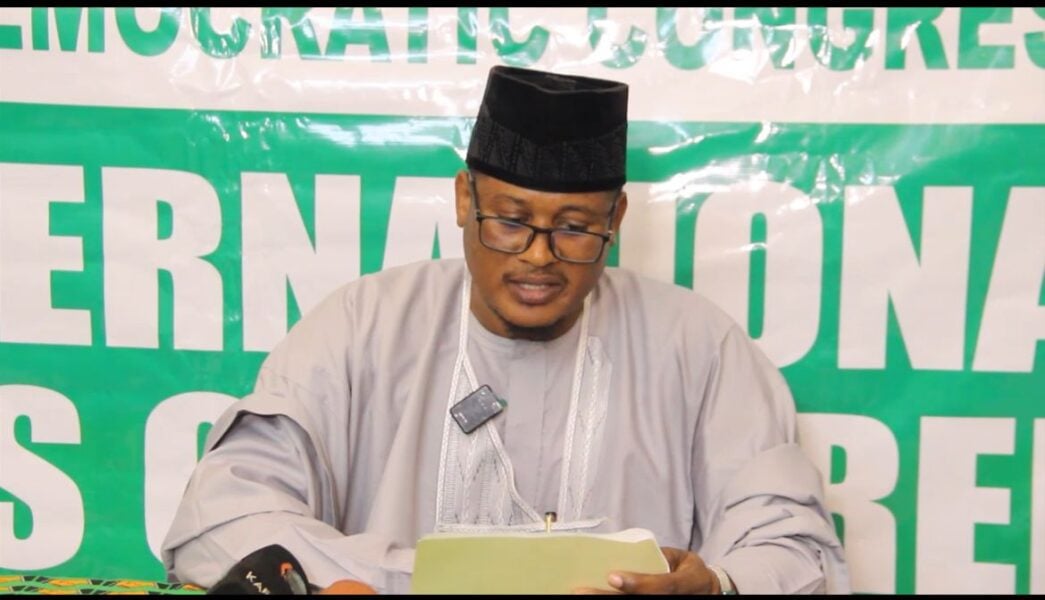
This judgment was a win not just for the SSS but for all Nigerians, as it upholds constitutional governance and protects democracy.
Another important move is the review of cases of people wrongfully arrested and detained without enough evidence. When investigations show someone is innocent, the SSS works to release them and help them reintegrate.
Recently, in May, the SSS released a Yobe State resident named Ya’u Mohammed after confirming he was not linked to any crime. They also helped him financially with ₦2 million to assist his reintegration.
Whether one agrees with the SSS's actions or its critics, this growing use of judicial processes is a positive sign for democracy. Strong democracies rely on institutions that resolve disputes through fair legal means, not force.
These changes help the public see the SSS as an agency seeking legitimacy by following the law and constitutional processes.
The Case for Specialised Terrorism Courts
Despite these successes, challenges still exist.
One major issue is the slow pace of criminal trials. Cases of terrorism and kidnapping often require long investigations, many defendants, and lots of evidence, which can delay court proceedings.
To tackle these problems, the Federal Government and the judiciary should think about setting up special courts for terrorism and national security cases, or dedicated divisions within current courts.
These courts could have judges and prosecutors trained specifically for these types of cases, with better security and modern systems to speed up trial processes while protecting defendants' rights.
Countries facing ongoing terrorist threats have created special judicial systems to deal with national security cases quickly. Nigeria could learn from these examples.
For instance, Pakistan has Anti-Terrorism Courts (ATCs) that handle terrorism financing, insurgency, and related crimes. Saudi Arabia also has a Specialised Criminal Court for terrorism and national security cases.
A better judicial system would help reduce backlog, preserve evidence, protect witnesses, deliver timely justice, and boost trust in the criminal justice system.
Strengthening Public Trust Through Justice
In the end, security cannot survive on force alone. It needs public trust.
People are more likely to help security agencies when they believe suspects will have fair trials and victims will get justice. Communities will share information when they see that what they report leads to real legal outcomes.
The recent convictions from SSS investigations are significant beyond the individual cases. They show that Nigeria's fight against terrorism, banditry, kidnapping, and organized crime is now happening in courtrooms as well as on the streets.
As the SSS continues to change under its current leadership, and as the courts handle complex security cases, Nigeria has a chance to build a culture where justice, not just force, is key to national security.
This would be a win for the SSS, the rule of law, and all Nigerians.




Drop your comment
No comments yet — be the first to drop the gist 👇