
Every serious study eventually hits a point where it can't just use old words. It has to create new ones.
The three-month effort that led to The Insecurity Triad, the Trinity of State Decay, and the Decoupling Sovereignty Index faced this challenge many times. New situations needed new ideas, and new ideas needed new names.
Some of these names show how things fall apart. Others explain how things stay the same. Still others talk about what recovery needs. Together, they make a vocabulary about sovereignty, its breakdown, its distortion, and its possible rebuilding.
Understanding the Vocabulary
Before we name the ideas, we should first talk about the structure that organizes them.
The Insecurity Triad pointed out three ways rival sovereignty arises: Money, Land, and Mind. Kidnapping fuels violence through ransom economies, that is Money. Banditry controls territory and the means of production, that is Land. Terrorism changes beliefs, deciding who people trust and who they fear, that is Mind.
These three areas do not work alone. They come together. Their coming together is what makes The Insecurity Triad a system instead of just a list of problems.
What the Trinity of State Decay shows is what happens to a state when these areas overlap. Money drains the state's financial and security power. Land slips from its control. Mind withdraws, citizens, communities, and even institutions stop believing that the state is the right authority. The Trinity shows the structural effects of what the Triad starts.
The Decoupling Sovereignty Index then looks at how far each area has separated. M1 measures the Money side, how much ransom economies and rival revenue systems have taken over the state. L measures the Land side, the decline in territorial authority and enforceability. M2 measures the Mind side, the breakdown of trust and legitimacy in institutions.
Every idea that follows in this piece fits into that structure. The Institutional Mirage is what the Mind side creates in governance. The Shadow Order is what Land and Money create when they combine to form rival authority. The Ransom Economy is Money at its most organized. Constitutional Erasure is Land rewritten at gunpoint. The Psychology of the Table is Mind at its most exclusionary.
Money. Land. Mind. That is the structure. What comes next is the language it creates.
Signs of Collapse
One of the ideas that came out was the Trinity of State Decay.
Think about what happens when a state starts to lose control.
It does not just lose one thing. It loses three, at the same time, and in ways that speed each other up.
Territory goes first, or maybe institutions go, or people stop trusting before the others change. The order can differ. What does not change is the overlap.
The first area is territorial: the state’s control over physical space becomes challenged, broken up, then missing in places it once held easily.
The second is institutional: governance structures stay in place, ministries are open, officials work, procedures get followed, but effectiveness fades, and with it, public trust.
The third is psychological: citizens begin to lose faith. Not all at once. Not loudly. But slowly, they take their emotional loyalty away from the state and turn it towards other identities, other authorities, other protections.
Then the cycle closes.
Land is lost because institutions are weak. Institutions weaken because citizens no longer trust them. Citizens lose their trust because the state can no longer protect the land.
Each failure allows the next. Each decline deepens the others. The trinity does more than just describe decline, it drives it.
That makes it a trinity rather than a list.
But what takes the place of the failing state? Two ideas answer this question, and they need to be understood together.
The first is the Institutional Mirage. When a state loses real authority, the actual ability to protect, enforce, and deliver, its formal structures do not always vanish. They remain. Ministers are chosen. Budgets are approved. Ceremonies are held. The structure of governance stays visible, sometimes impressively so. But it no longer works as a structure. It acts as a backdrop.
The Institutional Mirage is the state acting out sovereignty it no longer has.
The second idea is the Shadow Order. In the areas the Mirage cannot reach, other authority structures move in. They may be armed groups, criminal networks, ethnic militias, or insurgent groups. They gather their own money, enforce their own rules, and offer their own version of protection, no matter how violent or exploitative. They do not just fill a gap. They create a rival sovereignty.
The Institutional Mirage and the Shadow Order are not opposites. They make a system. One acts with authority without having it. The other has authority without acting in the state's language. Together, they show the separation at the heart of the Trinity of State Decay: the split between legal sovereignty and real sovereignty, between the state that is on paper and the state that is on the ground.
Keeping the Collapse Going
This kind of collapse does not keep going just by chance. It needs mechanisms, arrangements, deals, and distortions that keep the system running even as it falls apart.
Three ideas explain these mechanisms.
The first is the Ransom Economy. In areas where the Shadow Order operates and the Institutional Mirage cannot reach, kidnapping becomes more than just crime. It turns into business. Ransom payments become a source of income, funding armed groups, keeping supply chains running, and creating jobs in the logistics of kidnapping and negotiation. The Ransom Economy is not a disorder in the economy. In the areas where it operates, it is the economy.
The second mechanism is Pacification Bargaining. Faced with armed groups it cannot defeat, the state, or the communities stuck between the state and the Shadow Order, starts informal talks. Cattle routes are quietly given up. Seasonal movements are allowed. Attacks stop in return for unspoken deals. The bargaining is never publicly recognized, because doing so would mean admitting the limits of state power. But it happens. And each round of bargaining, no matter how sensible, extends the life of the situation it was meant to control.
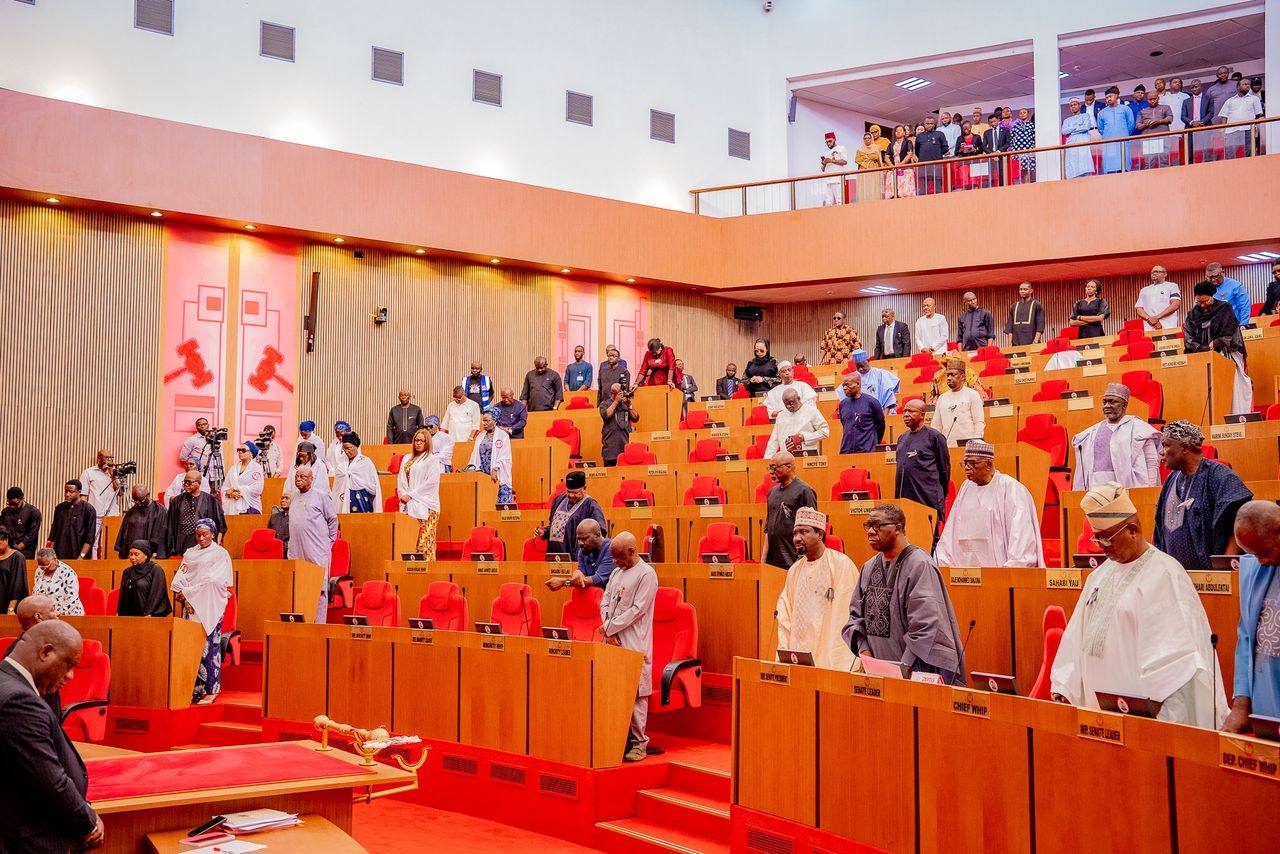


The third is Constitutional Erasure. This is not a legal issue. It does not happen in courts or parliamentary chambers. It happens on the ground, at gunpoint. This is a Violent Change of the Constitution, not through any proper process of revision, but through threats of violence. The armed group does not ask the state to redraw its map. It does it by itself, placing its own authority where the constitution once held.
Constitutional Erasure is the illegal way armed non-state actors replace the official state map with their own order. Where the state’s constitution says one thing about who governs a territory, the gun says another, and the gun wins. The armed group does not just take over the area. It renames it. It redraws it. It writes its own authority into territory that the constitution still claims but can no longer control.
This is counter-constitutional rewriting: a rival map created through violence.
The constitution may still exist on paper. But on the ground, a different set of rules applies, unwritten, unapproved, enforced by the threat of death. What disappears is not the text of the state’s founding law but the real situation it was meant to explain.
Who Belongs?
Under the structural and economic parts of decay lies something harder to see but still important: the question of who belongs.
Political power is often thought of through offices, armies, and constitutions. But societies often have another, less visible way of measuring authority.
Who is at the table?
Who is invited?
Who is missing?
Hope for Recovery
One of the most hopeful ideas that came from this work was the concept of the Architecture of Resurrection.
Most discussions about state weakness focus on decline and collapse. Much less attention is given to recovery. Yet history shows that societies can bounce back remarkably well.
The Architecture of Resurrection refers to the design needed to rebuild state effectiveness and trust after major disruptions.
Resurrection is not just fixing what was broken.
A building that has partly fallen cannot just be painted and called fixed. It needs redesign. Its foundations must be re-evaluated. Structural weaknesses must be addressed. New support systems must be added.
The same idea applies to states.
The Architecture of Resurrection involves the careful rebuilding of authority, trust, and institutional strength. It asks tough questions.
How is control of territory restored?
How is faith in institutions rebuilt?
How are citizens who feel alienated brought back into a common political project?
How does sovereignty become reconnected, the Institutional Mirage turned into real authority, the Shadow Order replaced, the Ransom Economy shut down, Pacification Bargaining replaced by real security, and Constitutional Erasure reversed by the renewed enforcement of rights?
How are communities that have been left out brought back, not as afterthoughts but as key members of the political project?
The metaphor is intentionally architectural because lasting recovery requires design, planning, and structure. Political resurrection cannot be done without careful thought.
These ideas did not come up alone. They developed in conversation with each other, each one clarifying or extending the others.
States do not just exist through constitutions and force. They also exist through how people see them. They survive because people believe institutions matter, believe they belong at the table, and believe collective political life is worth investing in.
On the other hand, states fall apart when these beliefs weaken, when the Institutional Mirage replaces real authority; when the Shadow Order fills the gaps the state has left; when the Ransom Economy becomes normal; when Pacification Bargaining takes the place of real security; when Constitutional Erasure empties the law of its power; and when the Psychology of the Table turns into a mindset of permanent exclusion.
That is why having the right words matters. These are not just terms to describe things; they are ideas that show how sovereignty separates from authority and states slide into decline.
The Trinity of State Decay shows the complex nature of collapse. The Institutional Mirage and the Shadow Order name the two sides of separated sovereignty. The Ransom Economy, Pacification Bargaining, and Constitutional Erasure explain the mechanisms that keep it going. The Architecture of Resurrection focuses on how to rebuild.
Together, they show that studying these issues is not just about gathering information. It is also about creating language that can explain realities that old words struggle to capture.
Sometimes the first step in understanding a crisis is learning to name it.
And sometimes the first step towards recovery is finding the words that make getting better possible.

Drop your comment
No comments yet — be the first to drop the gist 👇