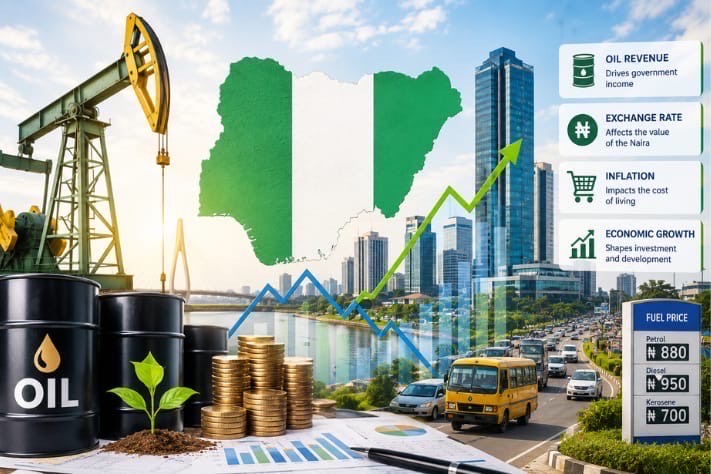
Nigeria's economy has been linked to the global oil market for many years. Even with efforts to diversify, crude oil still brings in a lot of money for the government and is a key source of foreign exchange.
Because of this, changes in global oil prices impact many areas. This includes public spending, currency stability, investor confidence, and how much households can afford to buy.
The connection between oil prices and the economy is complex. Higher oil prices do not always mean more money for everyone. Lower prices do not always lead to problems. Still, the ups and downs in oil prices mean they remain a big part of Nigeria's economic future.
A shaky source of revenue
Oil exports make up a large part of Nigeria's foreign income. When global oil prices rise, government revenue tends to increase, allowing for more public spending.
But oil markets are known for being unstable. Issues like political tensions, changes in global demand, and economic uncertainty can cause prices to change quickly.
This makes it hard to plan for the long term. Budget plans that look good when prices are high can quickly face challenges when prices drop.
Policymakers often have to weigh immediate chances against the risk of future price swings.
Effects on the Naira
One clear way oil prices affect Nigeria's economy is through the exchange rate. When oil revenues go up, more foreign currency comes into the country. This helps support the naira and makes it easier to access foreign exchange.
But when oil prices fall, the opposite happens. Lower export earnings put pressure on foreign currency reserves and raise worries about getting dollars.
This connection has become even more important as importers and consumers face a globalized economy. Changes in the exchange rate affect how much imported goods and everyday items cost. Thus, shifts in oil prices impact more than just the energy sector.
Inflation and living costs


Oil price changes can also impact inflation, both directly and indirectly. Nigeria's economy is still closely linked to energy costs. Transport and production costs respond to changes in fuel prices. When energy prices rise, businesses often pass some of these costs to consumers.
This can lead to higher prices for many goods and services. For families already facing rising living costs, this adds more pressure on their budgets and spending choices.
Stronger oil revenues can give the government more room to support economic programs or infrastructure projects that boost growth. But these benefits often take time to reach the wider economy.
Diversification is the long-term aim
A common topic in talks about Nigeria's future is the need to rely less on oil.
The country has made good progress in areas like technology, telecommunications, agriculture, and finance. These sectors are contributing more to the economy and creating opportunities outside the oil sector.
But diversification takes time. Oil is still a big part of Nigeria's financial structure. This means global price changes will continue to have a strong impact on the economy.
Many experts think the real question is how fast other sectors can grow to lessen the economy's dependence on oil price shifts.
Looking past the next price change
Oil price changes will likely remain a big part of Nigeria's economy for years. Global energy markets are changing, and the push for alternative energy sources raises new questions about future demand.
Nigeria faces a tough challenge. The country needs to keep benefiting from its oil resources while also building a stronger and more stable economy.
The future won't be decided by oil prices alone. But as long as crude oil exports stay a major source of income and foreign exchange, every rise and fall in prices will keep shaping Africa's largest economy.




Drop your comment
No comments yet — be the first to drop the gist 👇