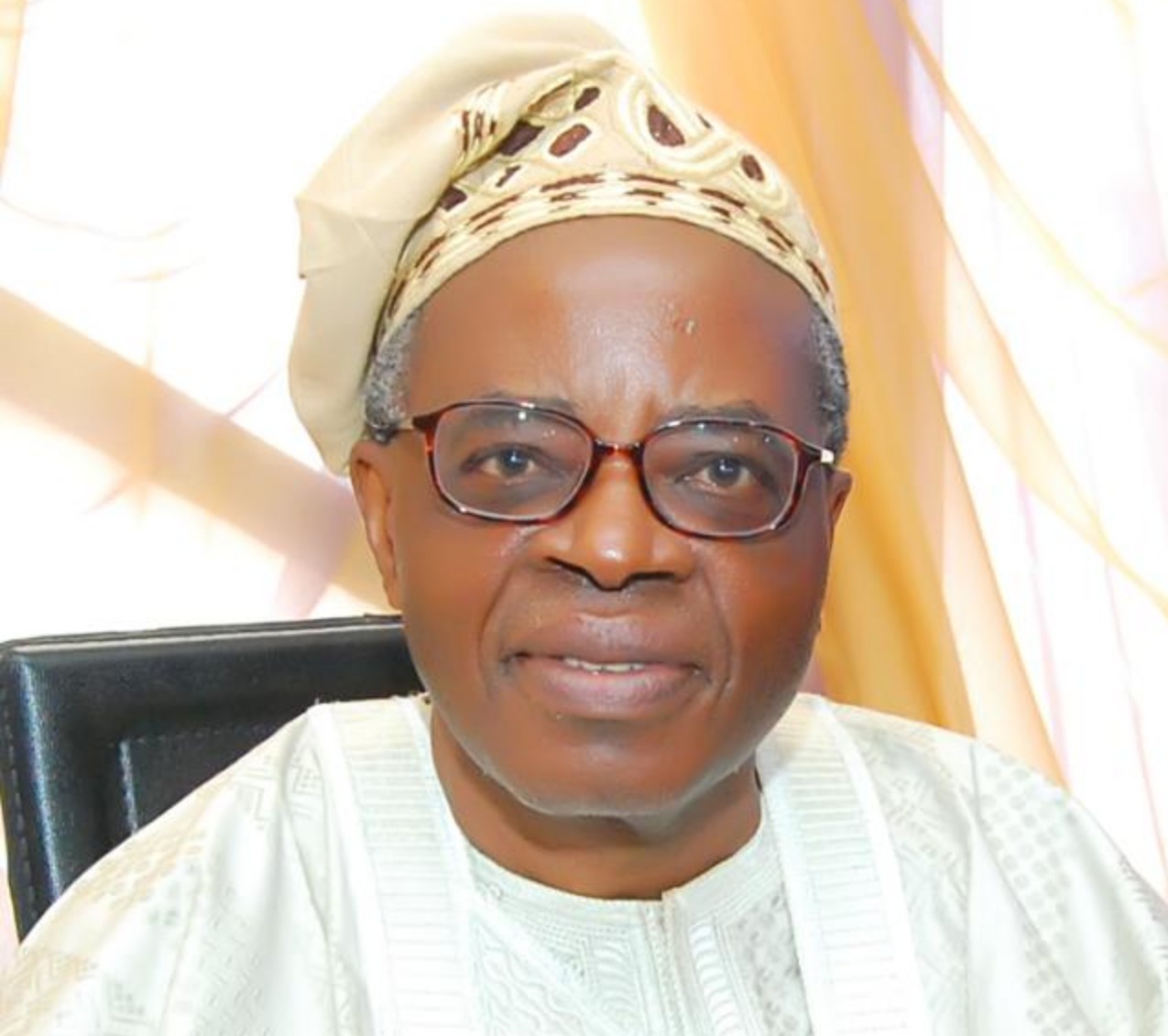
Corruption in Nigeria has moved from isolated cases to a common part of life in both public and private sectors. Despite many anti-corruption agencies, laws, and promises from past leaders, corruption remains a big problem. This article argues that just relying on legal ways to fight corruption is not enough. We need to wake up the Nigerian conscience. The main point is that corruption is not just a legal issue that needs court action; it is also a moral issue that needs a change in how citizens and leaders think.
By looking at what corruption means and how our conscience works, we can see why laws alone do not solve the problem. The article explores the history of conscience and corruption in Nigeria and the costs of corruption. It argues that our conscience is key to understanding Nigeria's corruption problem. It ends with practical ways to revive the Nigerian conscience as part of the fight against corruption.
Corruption comes from the Latin word corruptus, which means broken or spoiled. Today, it usually means misusing public office for personal gain. But this definition is too narrow. As Badejo (2024, p. 14) highlights, in Nigeria, corruption goes beyond just public office. It involves breaking any rules, norms, or ethical standards for personal or group benefits.
A broader understanding of corruption includes several types:
- Political corruption: misuse of public power by government officials
- Bureaucratic corruption: cheating in government processes, like bribery for quicker services
- Private sector corruption: companies cheating on taxes and working with public officials
- Judicial corruption: weakening the courts that handle corruption cases
- Social sector corruption: misusing resources by traditional leaders, churches, and other groups
- Everyday corruption: small bribes and extortion people face daily, making illegal acts seem normal
The World Bank says over $1 trillion is paid in bribes globally each year, with developing countries suffering the most. In Nigeria, corruption shows up as embezzlement, nepotism, bribery, extortion, money laundering, and stealing public property. Corruption has shifted from being unusual to accepted, from a secret act to a public achievement. This acceptance is dangerous because when corruption no longer shocks us, our conscience becomes numb.
In Nigeria Corruption Perception Data, Badejo presented the 3x3x3 Approach to understanding corruption, showing how deeply it is rooted in the three arms of government, three levels of government, and three sectors of society (public, private, and social). This widespread corruption is a pandemic, worse than COVID-19, and is dangerously accepted in Nigerian society.
Conscience comes from the Latin word conscientia, meaning knowledge within oneself. It helps people understand right from wrong. On the First International Day of Conscience (5 April 2020), I called conscience an essential guide for people to do good for others, including protecting our environment.
Conscience works at three levels:
- Antecedent conscience: guides actions before they happen, providing moral direction
- Concomitant conscience: goes along with actions, creating feelings of satisfaction or unease during the act
- Consequent conscience: judges actions after they happen, leading to pride, guilt, or regret
But conscience can be corrupted or silenced. Long-term exposure to corruption without punishment creates what can be called 'moral anesthesia.' This means people stop seeing ethical violations as significant. The issue in Nigeria is not the lack of conscience but its gradual weakening through years of accepted corruption, selective punishment, and the celebration of ill-gotten wealth.
This moral numbness is supported by social settings. More and more, families, religious groups, and community gatherings celebrate wealth without questioning its source. Parents who worked hard might hesitate to challenge their child's sudden wealth. Instead of asking about accountability, society praises visible wealth with respect and influence. The moral question of how wealth is gained is overshadowed by the social benefits of having it.
Religious and community groups are not left out. People who gained wealth through corruption are often recognized and given leadership roles in churches, mosques, and community organizations. Political leaders who steal public resources are often celebrated as benefactors for donating to religious causes. These practices legitimize unethical behavior and weaken our conscience. When society rewards the results of corruption and ignores integrity, corruption becomes normalized and encouraged.
The legal approach to corruption relies on external enforcement by state institutions, strict rules, and punishment like fines and imprisonment. Nigeria has set up laws like the Corrupt Practices and Other Related Offences Act (2000), which created the ICPC, the Economic and Financial Crimes Commission (EFCC) Act (2004), the Money Laundering Prohibition Act, and others. Despite this solid framework, convictions are low, high-profile cases take years to resolve, and recovered assets often disappear back into the system.
The moral approach depends on internal enforcement (conscience, shame, values), universal moral principles, social disapproval, and informal processes. As Chair of the NBA Anti-Corruption Committee, Badejo called corruption "professional suicide," explaining that it weakens institutions, destroys public trust, discourages investment, deepens inequality, and takes resources away from education, health, infrastructure, and security. Professionals, especially lawyers, should not put financial gain or political pressure above their duty to justice and society: Our integrity is our only currency (Premium Times, 19 May).
This highlights the role of conscience: while legal rules might suggest acceptable behavior, conscience stops people from exploiting loopholes and abusing trust. When conscience is pushed aside for greed, status, or politics, even the best legal frameworks fail because those meant to enforce the law often engage in violations themselves.
Laws and morality should work together. Anti-corruption laws are most effective when they match the moral values of society. On the other hand, laws against a morally indifferent society need more enforcement resources, which corrupt governments cannot sustain.
This explains Nigeria's situation: many laws and agencies exist, yet corruption continues. The EFCC can arrest many corrupt officials, but if society sees those people as heroes, the fight is already lost. The legal system addresses the corrupt official but does little to tackle the citizen who respects wealth, regardless of how it was obtained, or the peer group that admires the corrupt.
Claiming that corruption is a post-colonial issue is not accurate. Pre-colonial Nigerian societies had practices that today would be seen as corrupt, though they were different in scale and moral evaluation. More importantly, these societies had strong consciences that could fight against abuse.
In the Hausa city-states like Kano and Katsina, rulers earned wealth through tribute, trade, and war. While this was acceptable at the time, historical records show instances where tribute collection exceeded limits, with excesses kept by collectors. The Bori spirit possession cult sometimes checked this, as spirits could "reveal" hidden abuses, an early form of accountability through supernatural means (Doe et al., 2012).
The Oyo Empire had advanced accountability systems. The Oyo Mesi (seven principal councilors) could demand that the Alaafin (king) commit ritual suicide if he abused his office. The Basorun (prime minister) led this council. While not “anti-corruption” in today's legal sense, this system showed that absolute power cannot go with good governance. However, this system was also vulnerable: powerful Alaafins could remove hostile councilors, and by the nineteenth century, these mechanisms were weaker (Otunola, 2021).
The Igbo political system was decentralized, with authority shared among village assemblies (ama-ala), lineage heads, and age grades. The ama-ala acted as both lawmakers and judges, with power to sanction officials who misused community resources. Age grades worked as informal oversight groups. Ozo title societies, which included wealthy members, also created chances for status-based influence, a pre-colonial version of “elite capture” (Ocha, 2025). These societies had their own corruption, but they also had accountability systems rooted in public conscience (Okeke, 2023).
The Benin Kingdom had a detailed system of titled chiefs (Uzama) who served the Oba and kept him in check. The Iwebo society managed royal items and treasury; the Ibiwe handled palace affairs; the Iweguae managed trade and tribute. This system allowed for bureaucratic specialization but also gave chances for corruption. Oba Ewuare the Great (c. 1440-1473) famously purged corrupt chiefs, showing that corruption was serious enough to need royal action.
The Sokoto Caliphate, established after the 1804 jihad, set up Islamic legal rules against embezzlement, bribery, and fraud. The Emir was advised by a council of scholars (ulama) who could criticize the Emir’s administration. The hisbah system acted as a market watchdog and ombudsman. But as the Caliphate grew, provincial governors sometimes diverted taxes, which reformist scholars condemned. The moral conscience, rooted in Islamic law, remained active, but enforcement weakened as one moved away from the center.
Colonial rule brought English criminal law, including laws against bribery and fraud. The 1916 Criminal Code (later the Criminal Code Act, Cap C38 LFN 2004) made corruption illegal in public life. But colonial justice was often selective: corrupt acts that helped colonial interests were ignored, while those against colonial interests faced severe penalties. This set a dangerous example of biased justice.
The independence constitution (1960) and republican constitution (1963) kept anti-corruption laws. More importantly, the political leaders of the First Republic, despite their eventual failures, operated in a moral environment where corruption was not yet accepted.
Records show that allegations of corruption, abuse of office, conflicts of interest, and misuse of public resources were already present during colonial times and the First Republic. While corruption then was much smaller than what happened under later military and civilian governments, these early issues eroded public trust in political institutions and contributed to the military coup of January 15, 1966.
Dr. Nnamdi Azikiwe, a primary architect of Nigerian nationalism, became the first President. But his political career was not without issues. In 1956, the Foster-Sutton Tribunal investigated the African Continental Bank (ACB), linked to Azikiwe. The Tribunal found that Azikiwe did not separate his public duties from his private interests in the bank. It was found that while in government, he kept ties with the bank and used his influence for its benefit (Osoba, 1996).
Though Azikiwe was not prosecuted, the case raised serious questions about conflicts of interest and ethical behavior in public office. Colonial officials argued that a British minister in similar circumstances would likely have to resign. Yet, Azikiwe remained politically powerful and won support in the Eastern Region (Okonkwo, 2007). This case highlights one of the earliest big debates in Nigeria about public accountability and the separation of public office from private economic interests (Owasanoye et al., 2020).
Chief Obafemi Awolowo is known for introducing free primary education and planning for social welfare in Western Nigeria. He is seen as a man of integrity. However, his administration was also accused of financial wrongdoing.
The GBA Coker Commission of Inquiry (1962) was set up to investigate public corporations in the Western Region. The Commission found evidence of mismanagement and misuse of public funds. It concluded that funds had been diverted for political purposes and claimed that Awolowo knew about these transactions. The report criticized his failure to meet the standards expected of a public office holder (Ahuche, 2013).
However, the Commission became controversial itself. Critics said it was politically motivated and targeted the Action Group while ignoring allegations against Chief Samuel Ladoke Akintola and others (Diamond, 1988). Thus, historians still debate whether the Commission was a genuine anti-corruption effort or a political tool used during the First Republic.
Awolowo was never charged with corruption. Still, the controversy reveals how politics, public resources, and party competition became intertwined before independence and during the First Republic.
The Sardauna of Sokoto, Premier of the Northern Region (1954-66), held significant power. But before this role, records show that in 1943, Ahmadu Bello was accused by his cousin of misusing tax revenues while serving as District Head of Gusau.
He was also accused of accepting bribes from herdsmen. Although there were suggestions that these charges arose from political rivalries, the Sultan’s Court convicted him and sentenced him to one year in prison. Upon appeal, a higher court in Zaria overturned the sentence due to a technicality regarding his oath of innocence.
Prime Minister Abubakar Tafawa Balewa is seen as one of Nigeria’s most modest and honest political leaders. Notably, even before independence, Balewa publicly condemned corruption. As early as 1950, he described bribery and corruption as "the twin curses that pervade every rank and department of government" (Owasanoye et al., 2020).
Despite his personal reputation, his government did not set up a strong anti-corruption system. While it supported the Coker Commission in the Western Region, it did not initiate similar investigations into the federal government or regions controlled by coalition partners, such as the NPC and NCNC.

This selective accountability weakened public trust in government. By the mid-1960s, corruption, electoral fraud, political violence, and regional tensions became major sources of public dissatisfaction. Although corruption during the First Republic was less severe than later military regimes, failing to address these issues contributed to the justification for the military coup on January 15, 1966.
The founding fathers’ most significant corruption legacy was structural, not personal. The regional federalism they created under British parliamentary rules brought contradictions. It set up multiple power centers with independent revenue streams, making central oversight tough. The Westminster system did not have clear separations of power to facilitate checks. Their political culture, which prioritized ethnic and regional loyalty over national identity, led to resource management issues.
The military coup of January 15, 1966, explicitly pointed to corruption as a reason. Major Chukwuma Kaduna Nzeogwu stated: "Our enemies are the political profiteers, the swindlers, the men in high and low places that seek bribes and demand ten percent… Those who have corrupted our society and put the political clock back to the time of our grandfathers." Despite the ethnic dominance in the coup's execution, it voiced genuine public anger against elite corruption. The tragedy was that military rule did not fix corruption but changed its form.
The military, which took over promising to end corruption, instead allowed it to become a normal part of governance. Each regime added layers of corruption while numbing public conscience.
The Ironsi era was too short to assess corruption beyond his failure to punish the coup leaders and the imposition of a centralized military government on Nigeria. General Yakubu Gowon led the country during the Civil War (1967-70), which created vast chances for corruption. Issues like the Nigerian Air Force's failure to get functional aircraft despite huge spending and the diversion of food meant for civilians started corrupt practices that lasted beyond the war. The "Gowon must go" coup (1975) cited corruption as a reason.
General Murtala Mohammed and General Olusegun Obasanjo started the “public purification” campaign, dismissing over 10,000 public officials for corruption or inefficiency. The special military courts lacked due process but showed a commitment against corruption. However, this purge created an illusion of cleaning without real reform. The same systems that allowed corruption remained; only the people in charge changed.
The Second Republic under President Shehu Shagari returned Nigeria to civilian rule and civilian corruption. The Nigerian National Supply Company (NNS) became synonymous with graft. The “Rice Scandal” of 1983, which involved importing rice at inflated prices, became emblematic. Shagari's government was overthrown on December 31, 1983.
General Muhammadu Buhari and General Tunde Idiagbon launched the War Against Indiscipline (WAI). Their decrees allowed detention without trial and created a public complaints commission. They gained some high-profile convictions, but their authoritarian approach alienated civil society. The August 1985 coup brought General Ibrahim Babangida to power.
Babangida’s era marked a turning point for corruption in Nigeria. The Structural Adjustment Programme (SAP, 1986) opened doors for currency speculation, contract inflation, and capital flight. The $12 billion Gulf War “oil windfall” went largely unaccounted for. Babangida perfected the “corruption of process,” making every government deal negotiable and every contract inflatable for a price. He began the process of privatizing national assets, especially oil wells handed to powerful allies and traditional leaders. He became the patriarch of Nigeria’s corruption. The annulment of the June 12, 1993, presidential election marked the peak of his political corruption.
General Sani Abacha’s regime is remembered for state capture in Nigerian history. The Abacha family and associates stole an estimated $2-5 billion, hidden in accounts around the world. The “Abacha billions” became a term for extreme corruption. Abacha's strategy was systematic: he controlled oil revenues, awarded contracts to front companies, forced businesses to make “donations,” and used state security to enforce compliance. His death in June 1998 spared him from prosecution.
President Olusegun Obasanjo created the ICPC (2000) and EFCC (2004) and recovered some of Abacha's assets. Yet, his administration faced corruption allegations related to the “Third Term” project (2006). His use of anti-corruption agencies against political enemies raised concerns about the politicization of anti-corruption efforts. It’s one thing to create anti-corruption bodies; it’s another to ensure they act independently.
President Umaru Musa Yar’Adua promised to uphold the “rule of law,” but his illness and death distracted governance. President Goodluck Jonathan dealt with the “oil subsidy scam” (2012), involving billions paid to fuel importers without proper validation. By 2014, Transparency International’s Corruption Perceptions Index ranked Nigeria 136 out of 175 countries.
President Muhammadu Buhari brought renewed anti-corruption talk. His government launched major investigations and the Whistleblower Policy (2016). But few high-profile convictions came from this. As Badejo (2022) noted: “Our president presides over a corruption feast in Abuja while giving anti-corruption speeches abroad. The gap between speech and reality has never been wider.”
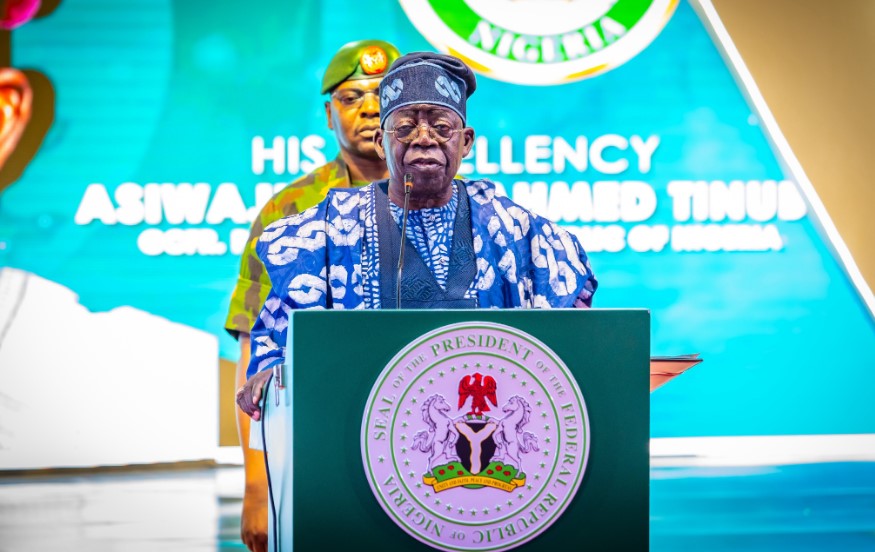
President Bola Ahmed Tinubu's government took over a system full of corruption. Early actions like fuel subsidy removal and unifying exchange rates were marketed as anti-corruption steps. However, Tinubu’s own history, including allegations from his time as Lagos State Governor (1999-2007), raised suspicions. The EFCC has secured some convictions, but overall, the President's stance appears to accept corruption as normal. Unlike the previous Minister of Power, the EFCC has been silent on cases involving two young women in the Ministry of Humanitarian Affairs under the current government. The President has ignored anti-corruption rules about competitive bidding for major projects in the country.
The IMF estimates that corruption costs Nigeria between 5-10 percent of GDP each year. The Nigeria Natural Resource Charter shows that Nigeria lost about $100-150 billion to corruption in the oil and gas sector between 2010 and 2020.
Corruption in Nigeria’s health sector leads to a high maternal mortality rate of 917 deaths per 100,000 live births and under-five mortality of 117 per 1,000 live births. Nigeria has around 10.5 million children out of school, the highest in the world. The country generates about 4,000 MW of electricity for 200 million people, which is less than Shanghai's 25,000 MW for 24 million people.
Electoral corruption has made vote-buying common. Judicial corruption has damaged trust in courts. Police corruption triggered the #EndSARS protests (October 2020), a public outcry against police corruption and brutality.
Foreign direct investment in Nigeria is low compared to its market size. The UK, Switzerland, and the US have returned billions in “Abacha loot”, a process that shows the depth of Nigeria's corruption.
The Civil Society Legislative Advocacy Centre (CISLAC) points out that corruption in the defense sector has worsened Nigeria’s security issues, despite over $19.9 billion spent on security from 2016 to 2022, much of which was lost to shady arms deals and mismanagement. Broader assessments suggest up to $15 billion might have been lost to questionable defense contracts over the last two decades, affecting the military's ability to equip and support its personnel, leading to low morale and even desertions among poorly equipped troops.
At the same time, corruption has allowed non-state actors to thrive, creating alternative economies around insecurity. Recent estimates suggest that between May 2023 and April 2024, about 2.23 million people were affected by kidnapping, resulting in roughly ₦2.2 trillion in ransom payments, more than Nigeria’s annual defense budget. In conflict areas like Zamfara State, corruption is seen as a major cause of violence, with about 71.8 percent of respondents identifying it as a key factor behind illegal mining, banditry, and links between state actors and criminal groups.
Consequently, insecurity has become deeply rooted, and in some regions, it operates like a separate form of governance. Communities often rely on local vigilantes or negotiate with armed groups for safety, showing the weakening of state authority. According to Chatham House (2023), this ongoing breakdown of security institutions is slowly eroding state power, disrupting agriculture, displacing communities, and worsening the cycle of instability and corruption in Nigeria.
Nigeria has a leadership problem. Leaders in politics, religion, tradition, and business have not shown integrity. This lack of good leadership allows corruption to thrive: if the President can steal, why not the Governor? If the Governor can loot, why not the local government chairman? If a Pastor can cheat their congregation, why not the Imam?
This leadership issue creates and results in a conscience deficit. Nigeria has many laws; it lacks the will to enforce them. It lacks this moral will because the nation's conscience has been dulled. This dullness is clear in:
- Celebrating wealth no matter its origins
- Accepting theft as a normal fact rather than a moral outrage
- Distrust in anti-corruption agencies
- Loss of shame: ex-convicts from abroad still hold office and act like respected leaders.
- Public officials accused of corruption keep their positions and receive national honors
- Legal and judicial processes move slowly in fighting corruption
Suggestions for Reviving the Nigerian Conscience
Moral Education Reform: Nigeria’s school curriculum should teach ethics, integrity, and civic duty, not just government structures but moral lessons that apply to daily choices, including integrity exercises that simulate ethical challenges.
Religious Institutions as Conscience-Builders: Religious groups should reclaim their roles by preaching against corruption, holding leaders accountable, forming interfaith coalitions, and rejecting the prosperity gospel that links wealth to divine blessing. This is tough because religious institutions benefit significantly from Nigeria's corruption.
Media as Moral Watchdog: Media organizations should adopt strict ethical standards with real penalties. Investigative journalism should be supported, funded, and celebrated.
Traditional Institutions as Moral Regulators: Many traditional authorities today lack authenticity. They are busy chasing government contracts while ignoring community needs. It would help if they publicly named and shamed corrupt politicians, refused titles to those of questionable integrity, and set up community accountability structures.
Anti-Corruption Agencies with Moral Mandate: The EFCC and ICPC should not only prosecute but also prevent corruption by partnering with schools, religious organizations, and media to build a culture of integrity.
Whistleblower Protection and Reward: Better protection for whistleblowers, including physical safety, legal immunity, and job security, would encourage conscience-driven reports.
Economic Restructuring: Fair wages to make bribery less appealing, transparent procurement to reduce kickbacks, and digital payment systems that trace diversions easily.
Judicial Integrity Reforms: More funding for judges and modern courts at all levels, including the Legal Practitioners Disciplinary Committee. Transparent appointment processes, adequate pay for judges, independent judicial complaints commissions, and fast-tracked corruption cases.
Leadership Example from the Top: When the President, Governor, Judge, Police Commissioner, Pastor, Imam, Professor, and Traditional Ruler show integrity, the environment for corruption collapses. The fight against corruption will succeed not when we have more laws or agencies, but when we have leaders who would rather die than steal, and citizens who challenge and call out corrupt individuals.
This article does not call for replacing legal methods with moral ones but for them to support each other. Law without conscience leads to compliance without commitment; conscience without law leads to feelings without punishment. The best anti-corruption strategy combines strong legal rules with independent enforcement bodies, quick and certain punishment, asset recovery, moral education, leading by example, social accountability, and cultural change that condemns corruption and honors integrity.
This article has shown that Nigeria’s corruption crisis is really a crisis of conscience. The history shows that while Nigeria has never been without corruption, it has also always had a conscience.
Drop your comment
No comments yet — be the first to drop the gist 👇